
Thesis
Open Thesis
Bachelor/Master Thesis: Leveraging Large Language Models for Gaze Prediction
Human gaze prediction plays a crucial role in understanding visual attention and designing user-centered intelligent systems. With the rise of large language models (LLMs), especially those with visual capabilities, gaze or attention can be estimated in “real-world scenarios” without requiring extensive eye-tracking data. However, the stability and reliability of these model-based gaze estimates across different image types, model families, and cueing conditions remain unclear.
For more information, contact:
Dongyang Guo (dongyang.guo[at]tum[dot]de)
Yasmeen Abdrabou (yasmeen.abdrabou[at]tum[dot]de)
Bachelor/Master Thesis: Can GenAI foundation models realistically reproduce human scanpaths?
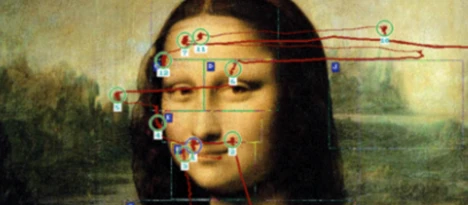
Human scanpaths (sequences of fixations and saccades) capture how people visually explore scenes and tasks. Modeling these sequences can provide insights into attention, perception, and human cognition, but collecting eye-tracking data is expensive, privacy-sensitive, and often domain-limited. This project investigates whether modern Generative AI foundation models (e.g. multimodal transformers or diffusion models) can learn to generate synthetic scanpaths that resemble real human gaze behavior.
Requirements:
- Strong Python skills
- Interest in computer vision, eye tracking, and generative AI
- Basic knowledge of deep learning architectures (transformers, VAEs, diffusion)
Contact:
yasmeen.abdrabou[at]tum[dot]de
virmarie.maquiling[at]tum[dot]de
Bachelor / Master Thesis: VR Classroom
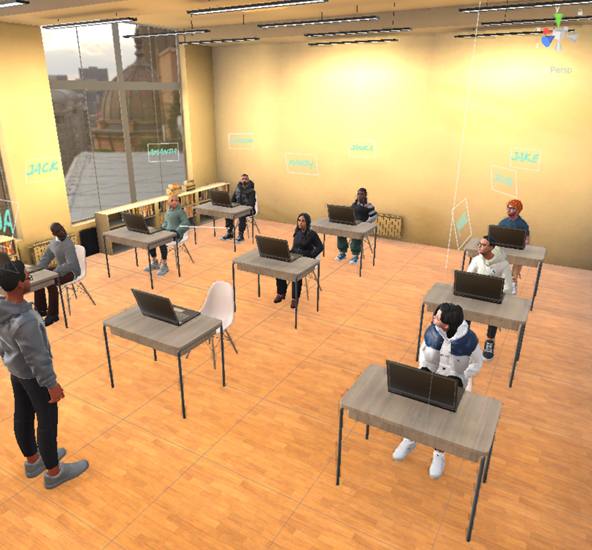
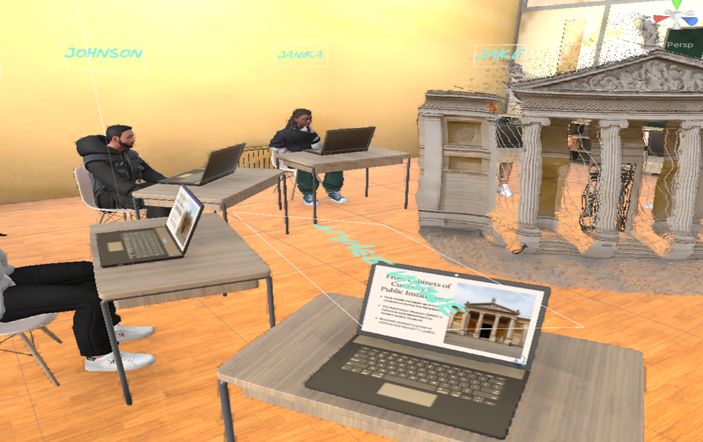
Virtual Reality (VR) technology has revolutionized the way we learn and interact with information. In this project, we aim to design a VR classroom that leverages the power of generative behavior and text models to enhance the learning experience for students.
The project is presumably suitable for students from computer science: games engineering, but also for all other students who have an interest in developing VR applications that integrate artificial intelligence.
For more information contact ozdelsuleyman@tum.de.
Ongoind Thesis
GenAI tool for reading
Key words: Educational Technologies, GenAI, eye-tracking, reading acquisition
The goal of this project is to design, implement and test a prototype for an ITS (Intelligent Tutorial System) that helps students to learn how to read and strengthen this skill. The project focuses on the conceptualisation of the reading tool (modality of feedback, simple interactive UX design) as well as the first implementation (prototype development and testing).
For more information contact Franziska Kaltenberger (franziska.kaltenberger[at]tum.de) and Enkeleda Thaqi (enkeleda.thaqi[at]tum.de)
Benchmarking webcam eye-tracking
Key words: Webcam-based eye-tracking, benchmarking, comparative study
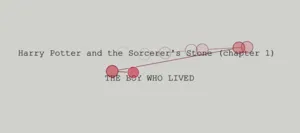
Eye-tracking allows to collect data of eye movements, which can be used to analyse cognitive processes such as reading difficulties. However, most high-quality eye-tracking technologies rely on dedicated hardware, limiting their accessibility and scalability. This is particularly challenging in educational technologies, where eye-tracking-based tools for learning and especially reading assessment should ideally function on standard consumer devices such as laptops or tablets, without sacrificing accuracy. In these areas, it is essential to obtain high-quality data using webcam-based eye-tracking systems.
For more information contact Franziska Kaltenberger (franziska.kaltenberger[at]tum.de) and Enkeleda Thaqi (enkeleda.thaqi[at]tum.de)
Effects of Gamification on Learners' Motivation and Engagement in Digital Learning Experiences
Gamification” is the use of game design elements in non-game contexts.
This bachelor thesis focuses on the effects of gamification on motivation and engagement in digital learning. A three-phase user study is included. The study will recruit 40 participants divided into two groups: one using a gamified platform (Datacamp) to learn Python, and the other using a non-gamified medium.
This study is supported by DataCamp, the most intuitive learning platform for data science and analytics. Learn any time, anywhere and become an expert in R, Python, SQL, and more. DataCamp’s learn-by-doing methodology combines short expert videos and hands-on-the-keyboard exercises to help learners retain knowledge. DataCamp offers 350+ courses by expert instructors on topics such as importing data, data visualization, and machine learning. They’re constantly expanding their curriculum to keep up with the latest technology trends and to provide the best learning experience for all skill levels. Join over 6 million learners around the world and close your skills gap. Find out more here: datacamp.com/groups/education.
Machine Learning-Based Student Modeling for Personalized Education: A Scoping Review
Keywords: Personalized education, student modeling, machine learning
Personalized educational systems rely on accurate models of learners to adapt content, feedback, and learning paths to individual needs. Machine learning plays a central role in building such student models, yet we lack a structured overview of which student-related features and algorithms are commonly used and how they contribute to personalization.
The goal of this thesis is to conduct a scoping review of existing research on machine learning-based student modeling for personalized education. The work systematically identifies and categorizes (1) student-related features used for modeling learners and (2) machine learning methods applied to student modeling. In addition, the thesis analyzes how these features and algorithms are used in practice and for which personalization objectives.
The results aim to support developers of educational platforms in prioritizing data collection and algorithm selection, while also highlighting gaps in current research, such as underexplored features or a lack of interpretable modeling approaches.
For more information, contact Isabel Schorr (isabel.schorr[at]tum.de).